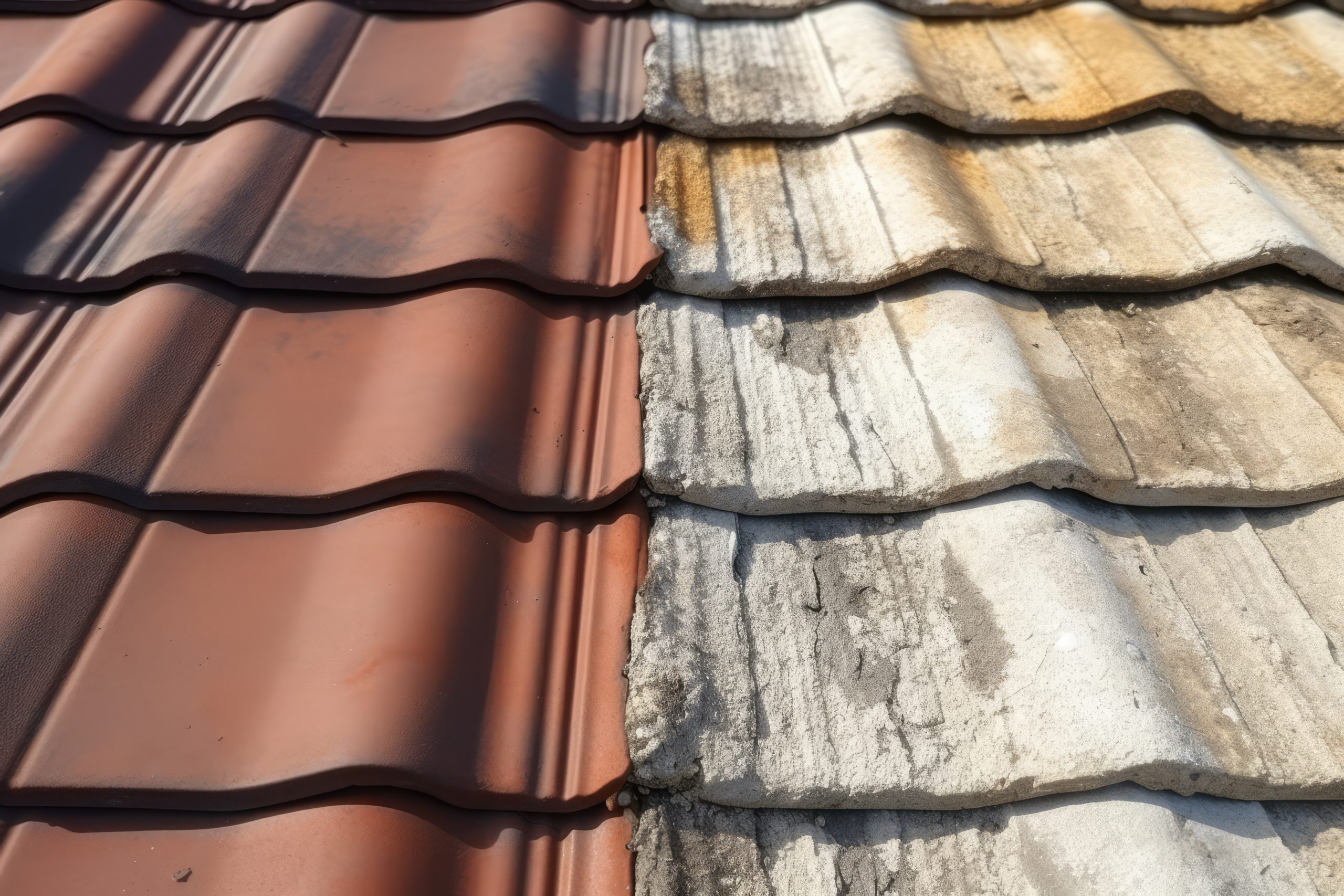
If your roof is getting on and something has gone wrong, deciding whether to repair or replace an old roof usually comes down to one question. Is this a single fault, or is the roof wearing out as a whole? A slipped tile, a cracked ridge or a tired piece of flashing on an otherwise sound roof is a repair. Faults that keep turning up in new places, on a covering that’s near the end of its natural life, point towards roof replacement. Most old roofs sit somewhere between the two, and that’s where the decision gets harder.
We’ve already covered the warning signs that you need a new roof in a separate guide, so this one focuses on the parts that actually decide the outcome. That means the money, the in-between options most homeowners don’t know exist, and the rules that change once a job gets big enough. We’re a roofing company based in Hailsham, and we’d honestly rather you spent less on a repair that works than more on a roof you didn’t need.
Repair or replace an old roof? Three questions that decide it
Age on its own is a poor guide. A well-laid slate roof can be older than the house next door and still perfectly sound, while a badly fitted concrete tile roof can be in trouble after twenty years. These three questions tell you far more.
How much life is left in the covering?
Different materials age at very different speeds. As we set out in our new roof guide, concrete interlocking tiles typically manage 40 to 60 years, clay tiles often 50 to 100, and natural slate 70 years or more. Historic England points out that slates can outlast any other roof covering before needing repair. If your roof is well short of its expected lifespan, repair is almost always the starting point.
Is the damage local or spread across the roof?
One leak you can trace to a single cracked tile is a local fault. Cracked or slipping tiles scattered across every slope, or leaks that reappear somewhere new each winter, tell you the covering is failing generally. Fixing local faults is good value. Chasing widespread ones rarely is.
What’s happening underneath the tiles?
This is the part you can’t see from the garden, and it often settles the question. Older roofs usually have bitumen felt underlay, which turns brittle with age and can tear or sag, particularly along the eaves. Battens can rot, and on slate roofs the nails holding each slate eventually corrode. Historic England notes that corroded nails alone don’t mean the whole roof has to go, as slates can be refixed. Once a significant number start failing, though, it makes more sense to strip the roof and put it right properly. A look inside the loft is the quickest way to find out which side of that line you’re on.
The real cost of repairing versus replacing
Most roof repairs cost somewhere between £150 and £1,500, and our guide to how much roof repairs cost breaks that down job by job. A full replacement is a different scale of spend. Checkatrade puts the UK average for a roof replacement at around £8,000, with most homeowners paying between £4,000 and £19,000 depending on the size of the roof, its shape and the material.
Those headline numbers can mislead you in both directions. The useful comparison isn’t one repair against one new roof. It’s what you’re likely to spend keeping the old roof going over the next five or ten years, compared with doing the job once. A £600 repair that buys you years of trouble-free service is money well spent. A £600 repair every winter on a roof that’s past its best is money you’ll never get back, especially when scaffolding has to go up each time.
A simple habit helps here. Keep a note of what you’ve spent on the roof over the last few years and add today’s quote. If that running total is climbing towards a meaningful slice of a new roof, and the covering is near the end of its lifespan anyway, replacement usually becomes the better use of the money.
The middle options between a patch and a new roof
Plenty of homeowners assume the choice is a quick fix or a complete reroofing job. In practice there are several options in between, and on an old roof one of them is often the right answer.
Re-bedding the ridge and hips
Loose ridge tiles and cracked mortar are some of the most common faults on older tiled roofs. Re-bedding or re-pointing the ridge and hips deals with them without touching the main slopes.
Stripping and re-laying with new underlay
If the tiles or slates themselves are still sound but the felt and battens underneath have failed, the roof can be stripped, fitted with new underlay and battens, then re-covered using the original material topped up with matching replacements. This works especially well on clay tiles and natural slate, where the covering is often worth keeping. Checkatrade puts the average cost of re-felting a whole roof under tiles at around £4,800.
Replacing one slope or section
Roofs don’t always wear evenly. The slope that takes the worst of the weather can fail years before the others, and a flat roof over an extension runs on its own clock entirely. Replacing just the section that’s failed can be a sensible middle ground.
Renewing the flashings
A surprising number of leaks on old roofs come from tired lead around chimneys, valleys and abutments rather than the tiles. Renewing the leadwork can stop a recurring leak that looked like a reason to replace the whole roof.
Rules that apply once the job gets bigger
Small repairs rarely involve any paperwork. Larger jobs can. According to the Planning Portal, you won’t normally need a building control application to repair or re-cover a roof if less than 50% of the roof and less than 25% of the building’s whole envelope is affected. Go over those limits and you’ll need approval, which can bring a requirement to bring the roof’s insulation up to standard. Approval is also needed if you make structural changes, or switch to a covering that’s 15% heavier or more than the old one, which matters if you’re thinking of swapping concrete tiles for clay or slate.
Like-for-like reroofing usually doesn’t need planning permission, though conservation areas and listed buildings have tighter rules. We cover the planning side in our new roof guide.
Bats
Older roofs are prime roosting spots for bats, and it’s the rule that catches most people out. All UK bat species and their roosts are fully protected, and Natural England’s guidance lists repairing or replacing a roof among the activities that can harm them. Disturbing a roost can lead to an unlimited fine or up to six months in prison. If there’s any sign of bats, a survey comes before the work, and a licence may be needed. It can affect when a replacement goes ahead, so it’s worth knowing about early.
Asbestos
The Health and Safety Executive says asbestos may be present in any home built or refurbished before 2000, including asbestos cement roofing products. It’s more likely on older garage roofs, some fibre cement slates and certain soffits than on a typical tiled house roof, but any material that looks suspect should be identified before it’s disturbed. A good roofer will flag it rather than work around it.
When repairing an old roof is still the right call
Repair usually wins when the covering has decent life left, the fault is isolated, and what’s underneath is sound. Storm damage is a common example. A few tiles lost in high winds on an otherwise healthy roof is a repair, and it may even be covered by your buildings insurance. The Association of British Insurers explains that policies generally cover sudden storm damage but not gradual wear and tear, so an insurer will pay to fix what the storm broke, not to replace a roof that was already worn out.
When a replacement roof makes more sense
Replacement becomes the better choice when faults keep appearing in different places, the underlay has perished across the roof, tiles or slates are failing on every slope, or the roofline has started to sag. It also makes sense when you’d be putting scaffolding up for a large repair anyway. A planned new roof lets you sort insulation and ventilation at the same time, and deal with soffits and fascias and guttering while access is already in place, instead of paying for it again in a few years.
Get an honest inspection before you decide
Whichever way you’re leaning, the decision should rest on what’s actually happening on and under your roof, not a guess from the ground. A proper inspection includes a look in the loft, photos of anything that needs attention, and a quote that shows the repair and replacement options side by side where both are realistic. If you’re comparing roofers, our list of questions to ask before hiring a roofer will help you judge the quotes you get back.
JP Roofing covers Hailsham and the wider East Sussex area, and you can see examples of our repairs and new roofs in our project gallery. To arrange an inspection, get in touch with us or call 01323 387154 for a free, no-obligation quote.
FAQs
Is it worth repairing a 30 year old roof?
Often, yes. Thirty years is well within the expected life of concrete tiles, clay tiles and natural slate, so an isolated fault on a roof that age is usually worth repairing. It becomes less worthwhile if faults keep appearing across the roof or the underlay has failed, as that points to the covering wearing out generally.
Can I keep my old tiles or slates when the roof is redone?
In many cases, yes. If the tiles or slates are sound but the underlay and battens have failed, a roofer can strip the roof, fit new underlay and battens, and re-lay the original covering with matching replacements for any broken pieces. This is common with clay tiles and natural slate.
Do I need building regulations approval to replace my roof?
You won’t normally need to apply if less than 50% of the roof and less than 25% of the building’s envelope is affected. Larger jobs, structural changes or a switch to a covering that’s 15% heavier or more will need approval, and may require the roof’s insulation to be upgraded.
How long does a roof replacement take?
Checkatrade says a replacement on a typical three-bed house with concrete tiles takes at least three to four days. Extra work such as new rafters, guttering or fascias can stretch that to around a week, and jobs needing scaffolding can take up to two weeks.
Will my home insurance pay for a new roof?
Usually only if the damage was sudden, such as a storm or a fallen tree. Buildings insurance generally doesn’t cover gradual wear and tear, so it won’t pay to replace a roof that has simply reached the end of its life.