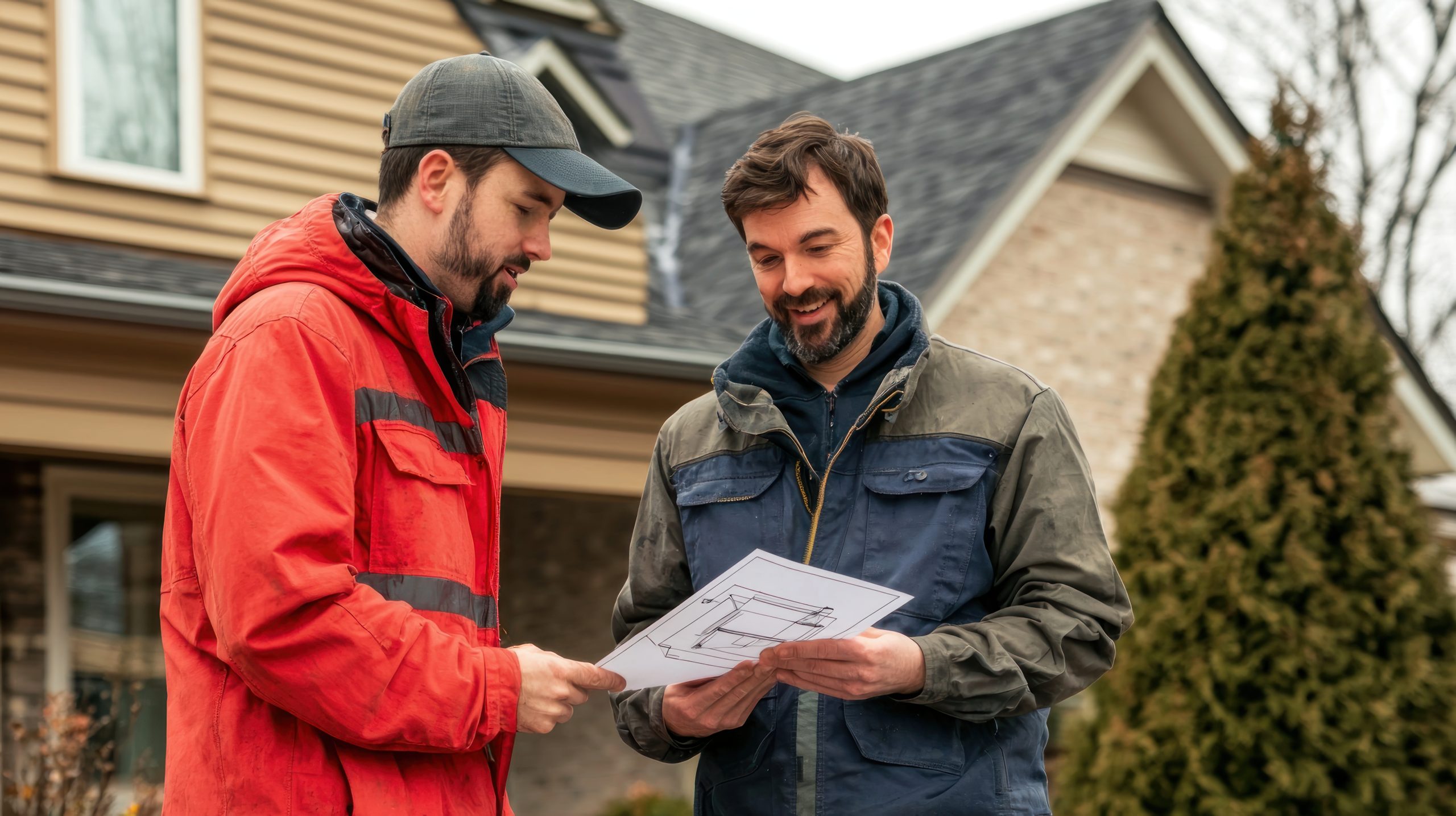
What Questions Should You Ask Before Hiring a Roofer?
Most homeowners only hire a roofer once every ten or fifteen years, which makes it hard to know what a good process even looks like. The contractor sitting in your kitchen with a clipboard has done this hundreds of times. You haven’t.
The short answer is this. Before you hire a roofer, ask about their insurance and accreditation, get a written and itemised quote, find out what guarantee backs the work, check whether the job needs building regulations sign off, and confirm what happens if a dispute comes up. Below is the full breakdown of each question, why it matters, and what a good answer sounds like.
Is the roofer insured and properly accredited?
Ask to see proof of public liability insurance, not just hear that it exists. Most reputable roofing contractors carry cover of at least £1 million to £2 million, according to the National Federation of Roofing Contractors, the UK’s main trade body for roofing firms. If a roofer hesitates to provide a certificate or asks you to just take their word for it, treat that as a warning sign rather than an oversight.
Roofing isn’t a licensed trade in the UK the way gas or electrical work is, so membership of a recognised scheme does a lot of the vetting for you. Ask whether the company is an NFRC member or registered with TrustMark, the government endorsed quality scheme for home improvement work. A firm on either register has already had its workmanship, customer service and financial standing checked.
Can they show you recent, local work?
Ask for two or three jobs completed in the last year, ideally close to you, that you can go and look at or call the homeowner about. A confident roofer will hand these over without fuss. If all they can offer is a handful of stock photos on their website, ask why, and compare that to a firm that’s happy to point you toward a gallery of completed local jobs you can actually see.
What does the quote actually include?
Insist on a written, itemised quote rather than a verbal figure or a text message with a number in it. It should set out the materials by brand and type, labour, scaffolding, waste removal and VAT separately. If one quote comes in noticeably cheaper than the others, ask exactly what’s been left out. Our own guide to how much roof repairs cost breaks down where that money typically goes, which makes it easier to spot a quote that’s missing something.
It’s worth getting quotes from at least three roofers for anything beyond a small repair. Make sure each one is pricing the same scope of work. A cheaper quote that specifies fewer tiles, no scaffolding, or a shorter guarantee isn’t actually a cheaper job, it’s a different job.
Is a repair enough, or do you actually need a new roof?
A trustworthy roofer will tell you honestly whether a patch repair will hold or whether you’re just delaying a bigger job. Ask them to explain their reasoning, not just give you a verdict. If you want to understand the signs yourself before anyone comes round, our piece on when you need a new roof covers the wear patterns worth checking first.
What guarantee or warranty do they offer?
There are three separate things here, and it’s worth asking about each one. The materials will usually carry a manufacturer’s warranty. The roofer’s own labour should come with a workmanship guarantee, typically somewhere between five and fifteen years depending on the job. On top of that, ask whether they offer an Insurance Backed Guarantee, or IBG.
An IBG matters because it protects you independently of the contractor. As the NFRC puts it, even the best contractors can go out of business, at which point their own guarantee becomes worthless. An IBG is underwritten separately, so you’re still covered if the company that did the work no longer exists.
Will the work need building regulations sign off?
Most small repairs don’t trigger this, but a full re-roof usually does. According to the NFRC, if the work covers 50% or more of the roof area, it needs to either be carried out by a contractor registered with a Competent Person Scheme, or your Local Authority Building Control needs to be notified in advance to check it meets Part L thermal performance requirements.
Ask the roofer directly whether they’re Competent Person Scheme registered. If they are, they can self certify the work and issue the compliance certificate themselves, which saves you arranging and paying for a separate building control inspection.
How will payment work, and what if you change your mind?
Ask how much deposit they want, when the balance is due, and whether payment is staged against progress on larger jobs. Be wary of anyone asking for the full amount upfront or pushing for cash in hand. The NFRC specifically warns that traders offering cash or VAT free deals are not easily tracked down if things go wrong.
If you do need to cancel after signing, UK government guidance on cancelling goods or services confirms a business can only keep or charge an amount that covers its actual losses from the cancellation, not an arbitrary fee. Ask them to explain how any cancellation charge would be worked out before you sign anything.
What’s the timeline, and who will actually be on your roof?
Ask for a realistic start date and how many days the job should take, plus what happens if bad weather pushes it back. Find out who’s actually doing the work too. Some firms use their own employed roofers throughout, others bring in subcontractors for parts of the job. Neither is automatically wrong, but you want to know which you’re getting and who’s accountable if something’s not right.
How will they manage site safety and clean up?
Ask whether scaffolding is included in the quote or costed separately, since it can be a significant chunk of the total on a full re-roof. Ask how they’ll protect your garden, driveway and any vehicles, and how waste and old materials get removed. A roofer who has a clear, practised answer to this is usually the same roofer who’ll leave the site properly finished at the end.
What happens if something goes wrong?
This is the question most homeowners forget to ask, and it’s often the one that matters most. Find out what their complaints process actually looks like before you need it, not after. NFRC and TrustMark member firms give you access to independent alternative dispute resolution if a disagreement can’t be settled directly, which is one more reason accreditation is worth checking early rather than assuming it doesn’t matter.
Red flags worth walking away from
None of these automatically means a roofer is dishonest, but any one of them is a reason to slow down and ask more questions before you commit.
- A roofer who turns up unannounced, inspects your roof for free, and says you need urgent work done today
- Pressure to sign on the spot or a discount that only applies if you decide immediately
- Reluctance to provide written insurance details, accreditation numbers, or a fixed business address
- A request for full payment, or a large cash sum, before any work has started
- A quote with no breakdown, just a single total figure
Hiring a roofer doesn’t need to feel like a gamble. Ask these questions, get everything in writing, and choose the contractor who answers clearly rather than the one who talks fastest. If you’re in Hailsham or elsewhere in East Sussex and want a written, itemised quote from a fully insured local team, get in touch with JP Roofing on 01323 387154.
FAQs
How many roofers should I get quotes from before deciding?
Three is a sensible minimum for anything beyond a very small repair. It gives you enough to compare pricing, scope and communication style without dragging the process out for weeks.
Is it worth paying more for an NFRC or TrustMark registered roofer?
Usually, yes. Accreditation isn’t a guarantee of a perfect job, but it means the firm has already been checked on insurance, workmanship and complaints handling, and you get access to independent dispute resolution if something goes wrong.
Do I need planning permission to replace my roof?
Most like for like roof replacements on a house don’t need planning permission, but they may still need building regulations approval, especially for a full re-roof. Listed buildings and conservation areas have extra restrictions, so it’s worth checking with your local authority if either applies to you.
What’s a reasonable deposit to pay a roofer upfront?
There’s no fixed legal figure, but a modest deposit to secure materials and a date is normal. Be cautious of any roofer asking for most or all of the payment before work has even started.
How long should a new roof guarantee last?
Workmanship guarantees commonly run between five and fifteen years, on top of whatever warranty the material manufacturer provides separately. For extra peace of mind, ask whether an Insurance Backed Guarantee is available too.
1 Comment
Repair or Replace an Old Roof? 2026 UK Guide | JP Roofing
October 2, 2026[…] options side by side where both are realistic. If you’re comparing roofers, our list of questions to ask before hiring a roofer will help you judge the quotes you get […]